
10 Signs of an Unhealthy Gut

Bloated after every meal? Can’t shake the brain fog? Breaking out in ways that no cleanser can explain?
When our gut is out of balance, the effects ripple out in ways that can be genuinely hard to trace back to the source.
This vast, intricate ecosystem of trillions of bacteria, and other microorganisms are living inside your digestive tract and is one of the most powerful and underappreciated systems in the human body.
It influences far more than just digestion. We’re talking energy, skin clarity, immune resilience, emotional well-being, and even how well you sleep at night.
Signs 1–3: Digestive Red Flags
1. Persistent Bloating and Excess Gas
Occasional bloating is normal. Bloating after every meal is not. When the gut microbiome is imbalanced, harmful bacteria ferment undigested food in ways your gut wasn’t designed to handle, producing excess gas, distension, and that uncomfortable “full but never satisfied” feeling. This is a hallmark of dysbiosis.
2. Irregular Bowel Movements
A healthy gut typically produces 1–3 well-formed bowel movements per day. Chronic constipation or frequent loose stools are meaningful signals from your microbiome. Good gut bacteria directly influence digestive motility, when they’re depleted, everything gets out of sync. Bowel regularity is one of the clearest indicators of a microbiome in balance. If your bathroom habits have become erratic or uncomfortable, that’s your gut’s version of waving a flag.
3. Food Intolerances and New Sensitivities
When the gut lining becomes compromised, it can become more permeable; sometimes called leaky gut, allowing partially digested particles into the bloodstream and triggering widespread immune reactions. Unlike true food allergies, which are present from birth or early life, food intolerances of this kind often develop over time as gut health gradually declines.
Sign 4: Your Skin Is Talking
When gut dysbiosis triggers systemic inflammation, those inflammatory signals travel through the bloodstream and can worsen skin conditions including acne, eczema, rosacea, and psoriasis. A 2025 peer-reviewed review in Gut Microbes confirms this isn’t a fringe theory; it’s an emerging pillar of dermatological science.
If you’ve been treating a chronic skin condition from the outside without addressing the gut, you may have been missing the root cause entirely.
Signs 5–7: Your Brain on Bad Gut Health
5. Brain Fog and Difficulty Concentrating
Your gut produces approximately 90–95% of your body’s serotonin — the neurotransmitter responsible for mood, cognitive clarity, and mental energy. When your microbiome is disrupted, serotonin production falters. The result: sluggish thinking and mental fatigue that no amount of coffee fully fixes.
6. Mood Changes: Anxiety and Depression
The vagus nerve carries information from the gut to the brain — your gut is actively shaping your emotional state in real time. Your gut microbiome produces GABA, dopamine, and serotonin. When it’s imbalanced, production of these chemicals falters. NIH-published research directly links gut dysbiosis to elevated rates of anxiety and depression.
7. Relentless Sugar Cravings
Certain gut bacteria signal through receptor pathways to promote the consumption of their preferred food source — sugar. When your gut is dominated by sugar-loving harmful bacteria, those bacteria are actively lobbying for more sugar. Breaking the cycle requires changing the bacterial landscape of the gut, not just exercising more willpower. Which is exactly where fermented, probiotic-rich foods come in.
Signs 8–10: Full-Body Fallout
8. Poor Sleep or Chronic Insomnia
Your gut bacteria produce precursors to both melatonin and serotonin, regulating your circadian rhythm. A 2024 NIH study found that sleep deprivation also disrupts gut microbiota diversity — creating a bidirectional feedback loop that’s hard to break without addressing both simultaneously. If you’ve been struggling with insomnia or restless nights without an obvious explanation, this is worth taking seriously.
9. Autoimmune Conditions and Flare-Ups
Approximately 70–80% of your immune system lives in your gut. A healthy, diverse microbiome teaches your immune system to accurately distinguish between threats and your own tissues. When dysbiosis disrupts this communication, the immune system can begin mounting inflammatory responses inappropriately — a contributing mechanism in conditions like rheumatoid arthritis, Hashimoto’s, and IBD.
10. Getting Sick Too Often
Good gut bacteria actively train immune cells, regulate inflammatory responses, and strengthen the gut barrier against pathogen entry. When the microbiome is disrupted, your defenses become both weakened and dysregulated. If you’re catching every cold going around, your microbiome may be the reason.
What You Can Actually Do About It
Your gut is remarkably adaptive. The right inputs, applied consistently, can shift the microbial landscape in meaningful ways within a matter of weeks. Here’s what actually moves the needle:
-
Eat different plant foods per week; diversity in diet drives diversity in your microbiome
-
Prioritize fiber, the primary food source for beneficial gut bacteria
-
Limit ultra-processed foods and added sugar — they feed the bad guys
-
Manage stress consistently — chronic stress actively disrupts gut microbiome composition
-
Prioritize Sleep — 7 to 9 Hours Consistently. If sleep has been poor for a while, improving gut health (especially via serotonin-supporting probiotic foods) can create a virtuous cycle in the other direction.
-
Move Your Body Regularly - Physical activity is directly associated with greater gut microbial diversity. You don’t need to run marathons; regular walking, cycling, swimming, or any movement that gets your body going consistently supports gut motility and a more diverse microbiome.
- Start slowly with probiotics; if you’re introducing probiotic-rich foods for the first time, your gut may need a little time to adjust. Start with just 2 fluid ounces and gradually increase.
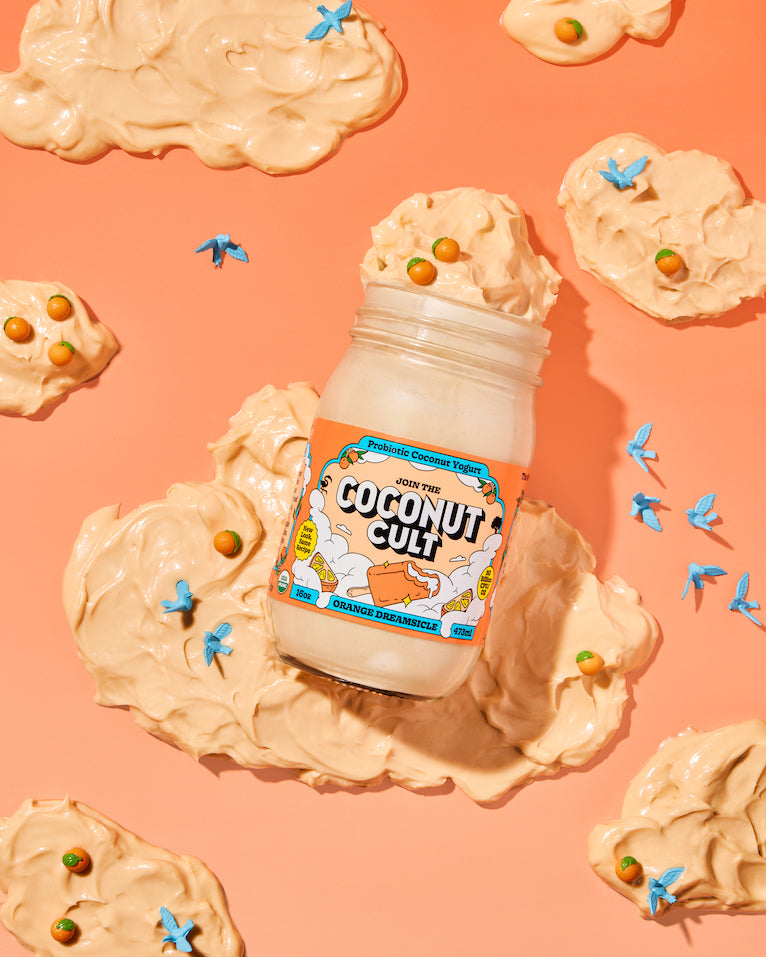
That’s where Coconut Cult comes in. Our super-live probiotic coconut yogurt is made with 16 carefully chosen strains of living, thriving probiotics, never pasteurized, with whole coconut as a natural prebiotic base.
Start with two spoonfuls a day. Stick with it. For more on what to expect when starting, read our Spoonful of Clarity post.
Shop all flavors or find a jar near you.
Your gut has been talking. It’s time to listen. Give your gut life.
